


DESCRIPTION OF EXISTING IMPLANT SYSTEMS
[price id=”5249″]
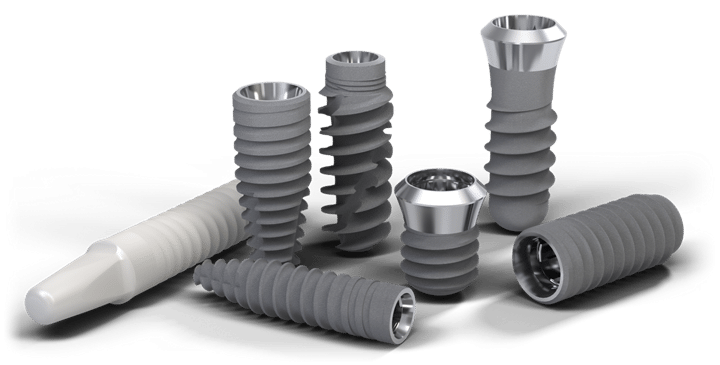
Modern implant systems are so varied that it can be challenging to choose the best solution, both in terms of price and quality. When it’s necessary to replace one or several teeth, it’s important to choose carefully, preferably after consulting with a dentist and assessing the overall condition of the oral cavity.
INDICATIONS FOR USING IMPLANTS
Before choosing a particular system, it’s important to understand whether there are specific indications for the procedure. These include:
- Loss of one or several teeth;
- Absence of back teeth;
- Complete edentulism—having no natural teeth left.
For some patients, using dental implants is the most comfortable way to restore their smile, while for others, it’s the only possible option.
DESIGN
The design of dental implant systems varies in cost, but all share a common structure:
- A post (also known as a screw or pin) acts as a substitute for the tooth root, implanted into the bone tissue;
- An abutment is a connecting element between the crown and the post, which is visible above the gums;
- A crown (new tooth) can be made from various materials. If a more affordable system is needed, metal-ceramic is a good choice. A more aesthetic and expensive option would be ceramic or zirconium.
EXISTING SYSTEMS
Today in Kyiv, one can choose from different types of systems based on the condition of the bone tissue and other indications.
- OSSTEM implants are made of titanium, ensuring high biocompatibility and strength. They are more affordable compared to premium brands. With proper installation and care, these implants can last 10-15 years or more.
- NEODENT implants are also made of titanium, ensuring high biocompatibility and durability. These implants offer good quality at a reasonable price. They typically last 10-15 years or more with proper care, and come with a lifetime warranty from the manufacturer.
- Straumann is known for its high-quality implants made of titanium and a unique material called Roxolid, which provides additional strength. These implants are the most expensive but also the most reliable, capable of handling stress in areas where other implants might fail. They come with a lifetime guarantee from the manufacturer and can last a lifetime.
These three brands offer high-quality implants that can last long with proper care, so the choice depends on individual needs and financial possibilities of the patient.
CROWNS
Which type of crown is better?
Doctors at our clinic recommend zirconium crowns for implants because they have many advantages. Firstly, zirconium crowns are biocompatible with gum tissues, meaning they do not cause irritation and provide comfort throughout the day.
Secondly, the surface of zirconium crowns is mirror-like, which prevents food accumulation and the development of inflammatory processes. The smooth surface does not allow bacteria to accumulate, a key factor in maintaining the health of the gums around the implants.
Metal-ceramic crowns do not have these properties. Their surface is porous, which does not allow achieving such a high level of polish. This creates a possibility for food residue accumulation, which can lead to implant rejection over time.
Ceramic crowns are better than metal-ceramic, but they still cannot provide the same smoothness of the surface as zirconium crowns. Although ceramic crowns are an alternative choice, they still cannot compete with zirconium in the long-term perspective due to their less ideal surface smoothness. Studies show that over time, micro attachments appear in the gums around zirconium crowns.
Thus, zirconium crowns are the optimal choice for ensuring a reliable and long-lasting result.