


Stages of Dental Implantation
[price id=”5251″]
A smile is the hallmark of every person. Losing even a single tooth can lead to problems with speech, difficulties in chewing, and shifting of other teeth at the site of the loss.
For this reason, upon the loss of a tooth, doctors recommend promptly consulting a dentist https://crystaldent.itsites.com.ua//uk/implantatsiya-zubiv/etapi-implantatsiyi-zubiv/ for implantation. This allows for the restoration of the dental row and its functionality, aesthetics, and a beautiful smile.
What is Dental Implantation?
Dental implantation is a process of dental restoration using a dental implant that is embedded into the bone tissue. Implants are an excellent option for restoring a smile. They are identical to natural teeth and require no special care. Moreover, there is no need to grind down adjacent teeth.
Today, modern dental offices are equipped with quality materials and equipment, comfortable conditions, and everything needed for a successful implantation procedure.
Stages of Implantation
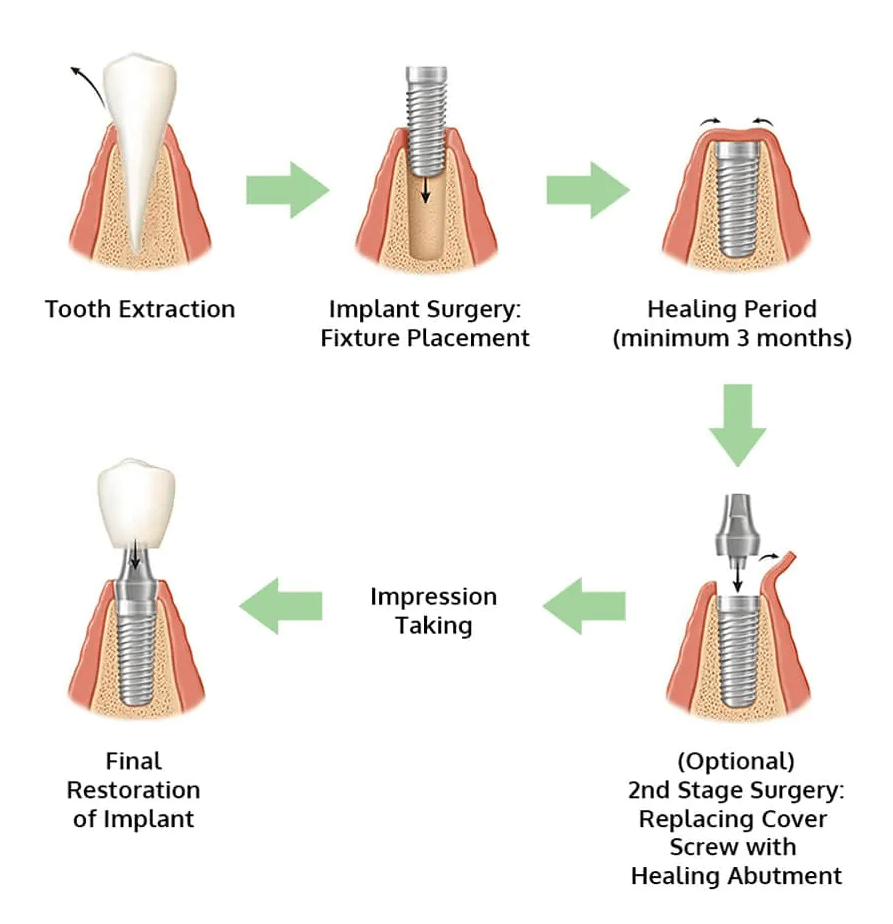
In the modern world, implantation is no longer considered a complex dental operation and is viewed as a routine procedure. However, it is indeed a real surgical intervention. To successfully carry out this procedure, several mandatory stages are necessary:
- Conducting diagnostic procedures for the patient.
- Preparatory stage.
- Surgical intervention stage.
- Final stage (orthopedic).
For a quality result, it is essential to go through each stage sequentially, without skipping any, and following all the doctor’s recommendations for examination and post-surgical care.
Diagnostic Procedures for the Patient
The initial examination allows for assessing the patient’s readiness for the implantation procedure. After collecting data about the patient, the doctor may prescribe tests. It is crucial not to neglect this stage, as it may reveal certain contraindications.
Unfortunately, surgery is prohibited for patients with:
- Weak immunity;
- Problems with the endocrine system;
- Bone diseases;
- Signs of oncological diseases;
- Poor blood clotting.
- Preparatory Stage
If no reasons for implantation prohibition are found, the next preparatory stage can begin. It starts with an examination of the oral cavity to identify its features and address any existing issues.
The doctor carefully examines the oral cavity, assesses the condition of the teeth, investigates the mucous membrane of the oral cavity, the presence or absence of prosthetics, atrophy (if present, assesses its degree), jaw bones, etc.
Then, the doctor conducts a computer tomography or X-ray, which is necessary for further steps. Based on the examination results, the dentist determines:
- The adequacy of the bone tissue of the alveolar process;
- The structural features of the jaw;
- The need for additional tissue layering using bone grafting.
If there are no complications, the specialist can immediately proceed to surgical intervention, recommended to thoroughly clean the teeth and remove plaque from the tongue beforehand.
Surgical Intervention Stage
The surgical stage is the main one. Typically, local anesthesia is used for the operation. There is no need for general anesthesia since local anesthetics are quite effective and sufficient for the procedure to be painless.
After the anesthesia begins to work, a small incision is made in the bone tissue and the implant is placed into a specially prepared hole. A special cap is placed on the post. After the operation, the gums are sutured. It is worth noting that the entire procedure follows a surgical protocol.
Healing
At this stage, it becomes clear whether the body will reject the implant or not. It is worth noting that the rejection rate is quite low. If rejection does occur, the doctor will perform the implantation again after some time. Previous rejection does not affect the success rate of future operations, so there is no need to worry.
Final Stage (Orthopedic)
The last stage involves scanning and sending the results to the laboratory. Based on the results, the technician selects an abutment and fixes it to the manufactured crown.
The crown is attached to the implant, after which the hole is closed using filling materials. After the procedure, the doctor provides recommendations for the care of the implanted tooth.
What are the Benefits of Dental Implantation?
The main benefits include:
- The crowns are almost indistinguishable from natural teeth, noticeable only to a specialist.
- Quick adaptation. Patients quickly adapt to the installed teeth, while removable dentures and bridges are more challenging to accept.
- Load on the bone. Implantation optimally loads the bone tissue, preventing its atrophy and preserving adjacent teeth.
- Artificial teeth allow for full nutrition, unlike removable dentures and bridges.
- Implants can last a lifetime, crowns for at least 10 years, bridges for 5-8 years, and removable dentures need replacement every three years.
Care Recommendations
All care recommendations consist of oral hygiene for the patient:
- Brush your teeth twice a day using a toothbrush.
- Rinse your mouth after every meal.
- It is recommended to purchase and use an irrigator and an interdental brush.
- Visit the dentist twice a year for preventative check-ups.
Implants have advantages not only aesthetically but also in functional terms.
Today, an implant can last a lifetime and requires no special care. It is only necessary to maintain daily oral hygiene.