


Clasp dentures
Clasp dentures prices
| Clasp prosthesis on clasps, class 1 | 14500 UAH |
| Clasp prosthesis on clasps, class 2 | 15000 UAH |
| Clasp denture Premium | 20500 UAH |
| Clasp prosthesis with locks | 17000 UAH |
| Clasp denture with Premium locks | 25000 UAH |
| Clasp denture with nylon base | 19500 UAH |
| Clasp denture with nylon base Premium | 23000 UAH |
Clasp denture photo
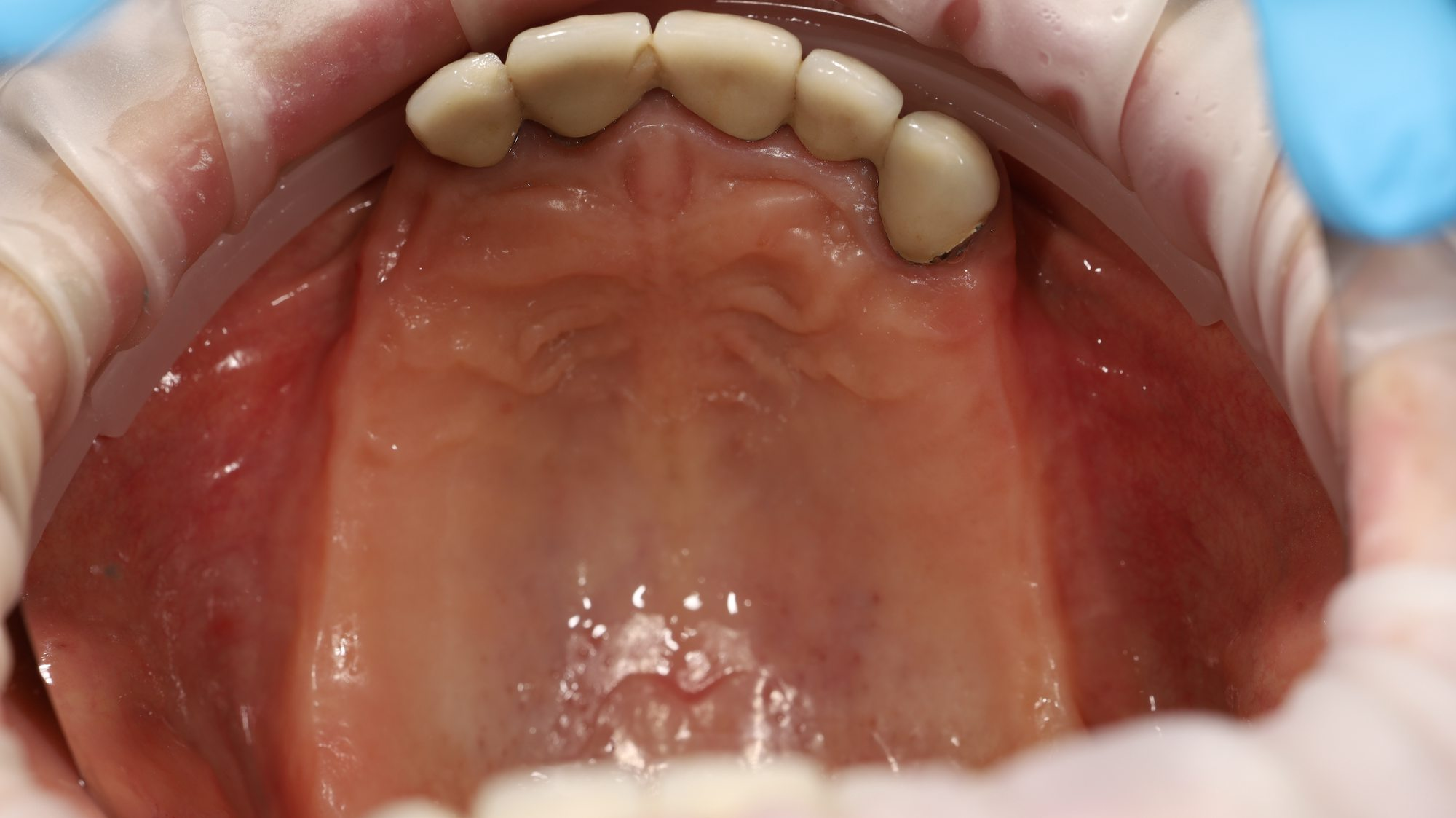
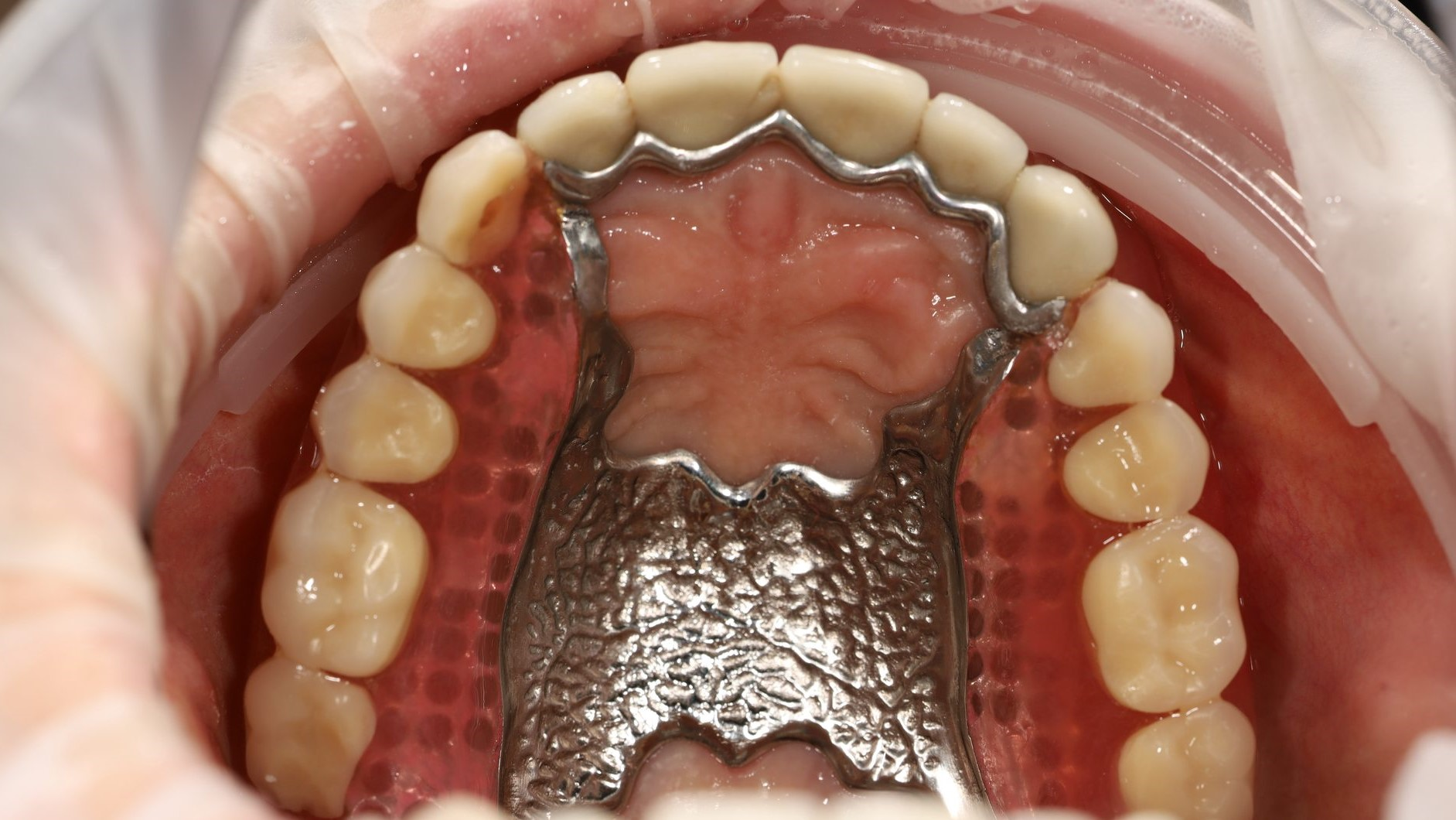
Clasp dentures, created on the basis of a metal frame, are considered one of the most popular in orthopedic dentistry. Their reliability and durability make them the best choice for restoring significant defects of the dentition. Such structures can be fixed both on the patient’s natural teeth and on implants.
Thanks to the acrylic base, imitating the gingival margin, the dentures look as natural as possible. Fastening is possible using microlocks, hooks or telescopic crowns. We consulted with the chief physician of the clinic in order to most truthfully understand the main types of clasp dentures. In the article, we will consider the advantages and disadvantages, as well as recommendations for care.
Main Types of Dental Prosthetics
Dentists in Ukraine classify prosthetics into three main categories:
Removable Prosthetics
Patients can independently remove and replace these prosthetics. They include plate structures and all types of partial removable dentures. These are particularly suitable for full tooth loss or extensive dental arch defects. Unlike regular removable dentures, partial removable dentures evenly distribute pressure on the gums and teeth, providing greater comfort.
Semi-Removable Prosthetics
These can also be removed by the patient, but their installation requires more care.
Fixed Prosthetics
Fixed by a dentist in a clinical setting, these are attached to supporting teeth or implants. Proper preparation, such as oral sanitation and tooth treatment, is crucial since access to supporting units is limited after fixation.
Service Life of Partial Dentures
The longevity of these dentures depends on their design, materials used, and quality of fixation. Proper installation and consistent care significantly extend their usability.
When does it make sense to use a clasp denture?
Partial clasp denture
can be used as a tooth replacement if…
- several teeth in a row are missing (including a defect in the cheek area that is not limited to a tooth on one side);
- the row of teeth is interrupted by several gaps;
- fixed prostheses such as a bridge are no longer possible;
- the patient wants favorable treatment;
- the remaining teeth and gums are healthy.
Contraindications for the installation of clasp dentures
Partial dentures are not suitable for patients with:
- Acute oral diseases.
- Deep overbite that interferes with proper fixation.
- Insufficient height of supporting teeth or their absence.
- Bone loss caused by pathologies.
- Short lingual frenulum hindering installation.
- Allergies to materials used in the denture.
- Severe psychological or neurological conditions that may affect treatment success.
Pros and cons of clasp dentures
Clasp dental prosthetics has a number of advantages and disadvantages. To understand this issue, it is better to ask the doctor. Before writing the article, the dentist in Kyiv Crystal Dent told us about such features:
Advantages
- Suitable for both upper and lower jaws.
- Even distribution of chewing pressure.
- High durability due to the absence of fragile components.
- Protect neighboring teeth from wear with special overlays.
- Minimal discomfort after the adjustment period.
- Long-lasting, up to 7 years with proper care.
Disadvantages
- Requires regular removal for cleaning and maintenance.
- Potential allergic reactions to metal, acrylic, or nylon components.
- Clasps may affect aesthetics.
The main rules for using clasp dentures
If you have been fitted with clasp dentures, you will have to wear them every day. If you take a long break from using the denture, this may cause some discomfort when you wear it again. In addition, it is important to remember that a denture that has not been used for more than four weeks may lose its suitability.
Regardless of whether the denture is in the mouth or stored on a shelf, it must remain impeccably clean. To care for it, it is recommended to brush it twice a day. Rinse the denture after eating.
Special tablets for cleaning dentures refresh and clean the denture very well.
If you provide high-quality daily care for the clasp denture, there will be no need to send a technician for cleaning. Professional care thoroughly cleans the artificial teeth and polishes all surfaces, eliminating micro-abrasions on the denture. Neglecting regular cleaning can affect the comfort of wearing and accelerate the wear of the denture.
How to clean partial dentures
One of the most important methods of caring for a denture is mechanical cleaning with a brush. It is advisable to carry out this procedure after each meal, but if this is not possible, then it will be enough to rinse the denture and the oral cavity with water. Mandatory cleaning should be carried out twice a day with a brush (you can also use paste).
Once a day, the denture must be disinfected with a special solution. Tablets and ordinary water are used to prepare it. The treatment process is simple: the product is placed in the solution for 5-10 minutes, and then removed. This time is enough to remove food debris and bacterial plaque, which are invisible at first glance.
After completing the procedure, the clasp dentures should be thoroughly rinsed with clean water.
Cleaning can be done with regular or specialized toothpaste, and you can also use a special brush for dentures or use the one you brush your teeth with. After finishing the treatment, the product must be rinsed again under running water.
Professional Check-Ups and Adjustments
To ensure that the denture does not cause discomfort, dentists recommend a check-up twice a year. During the check-up, the dentist carefully examines the oral cavity, assesses the condition of the denture and makes adjustments if necessary. This is especially important because the use of removable structures over time can lead to atrophy of the mucous membrane and bone tissue, which will affect the attachment of the prosthesis to the gum.
A scheduled visit to the dentist allows you to timely detect changes in the shape of the gums and adapt the prosthesis to the new anatomical parameters. Failure to follow this procedure can lead to an uneven distribution of chewing load, which in turn can lead to damage to the supporting teeth and wear of the denture.
Correction is also necessary if there are cracks or other defects in the structure. An experienced professional will repair the denture taking into account all the technical nuances, so that in the future you can use it without loss of quality. Remember that self-repair of the prosthesis is strongly discouraged, as it may worsen its condition or make it unsuitable for further use.